

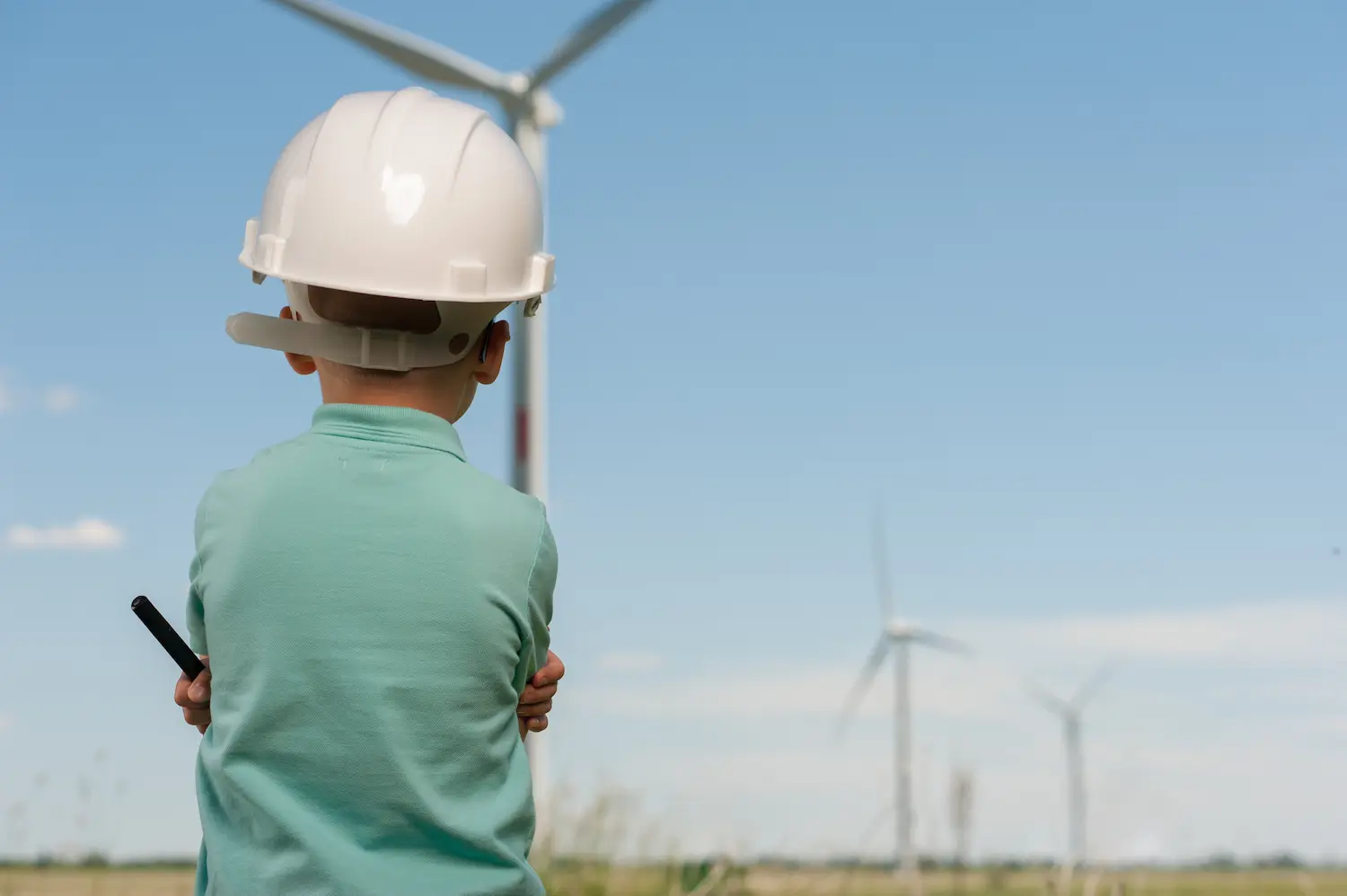
Artificial intelligence is advancing so rapidly that some tech leaders now believe it could fundamentally reshape the very idea of work. According to Vinod Khosla, billionaire venture capitalist and early investor in OpenAI, children under the age of five today may grow up in a world where traditional jobs are no longer necessary.
During an interview on the podcast Titans and Disruptors of Industry, Khosla shared a striking prediction: within the next two decades, AI systems could perform the vast majority of tasks currently handled by human workers. If his vision becomes reality, the economic model that has defined modern societies for centuries may be dramatically transformed.
A future where AI performs 80% of jobs
Khosla believes that by around 2040 or 2045, artificial intelligence could handle up to 80% of today’s jobs. The range of affected professions would be enormous. From salespeople and accountants to doctors and writers, many roles could be largely automated by advanced AI systems.
In this scenario, automation would drastically reduce labor costs. Businesses could produce goods and services far more efficiently, which in theory would drive prices down. According to Khosla, this dynamic could eventually create a world of economic abundance.
“The need to work will disappear,” Khosla explained during the interview. “People will still work, but only on things they want to work on—not because they have to.”
Other technology leaders have voiced similar ideas. Elon Musk, for example, has suggested that sufficiently advanced artificial intelligence could make traditional economic structures — including money itself — far less relevant in the future.
Children today may never need to look for jobs
Khosla’s most provocative prediction concerns the youngest generation. According to him, it is increasingly likely that children growing up today will never experience the job market in the way previous generations have.
“It’s quite possible that a five-year-old today will never need to look for a job,” he said.
In this vision of the future, people would pursue activities based on passion, creativity, or curiosity rather than economic necessity. AI would handle most routine and complex tasks, freeing humans to focus on what they truly enjoy.
The idea resembles the kind of post-scarcity society often imagined in science fiction — a world where technology produces enough wealth and productivity for everyone to live comfortably without traditional employment.
An optimistic vision — but many questions remain
Despite the optimism of this prediction, critics argue that the scenario may be overly simplistic. The assumption that automation automatically leads to lower prices and widespread prosperity remains highly debated.
In reality, companies might choose to keep prices high and increase profits rather than passing efficiency gains on to consumers. If that were the case, the benefits of automation could concentrate in the hands of a small number of technology companies rather than society as a whole.
Another fundamental question concerns income. If most people no longer have jobs, how will they afford the goods and services produced by automated systems?
One frequently discussed solution is a form of universal basic income (UBI), potentially funded by taxes on large technology companies benefiting from AI-driven automation. However, economic models and real-world trials have shown that maintaining such a system at scale could be extremely difficult.
Many economists remain skeptical
While Silicon Valley entrepreneurs often express enthusiasm about the transformative power of AI, economists and corporate leaders outside the tech sector tend to be far more cautious.
A recent survey of thousands of executives found that 90% reported no significant impact from AI on jobs or productivity over the past three years. Looking ahead, many respondents predicted only modest improvements: roughly 1.4% productivity growth and 0.8% output growth by 2029.
These projections suggest a far slower transformation than the near-total automation envisioned by some tech billionaires.
A prediction from someone deeply invested in AI
It is also important to consider who is making these predictions. Vinod Khosla is not just a commentator on artificial intelligence — he is one of its most prominent financial backers.
His venture capital firm, Khosla Ventures, began investing in OpenAI in 2019 and has supported numerous AI startups since then. As a result, Khosla has both financial and ideological reasons to promote an optimistic view of AI’s future impact.
That does not mean his predictions are impossible. But it does highlight an important dynamic in the current AI debate: many of the most optimistic visions about a post-work society are coming from the very people building and funding the technologies that could make it happen.
Whether the future brings mass automation and abundance or a more gradual transformation of work remains one of the most important economic questions of the AI era.
