

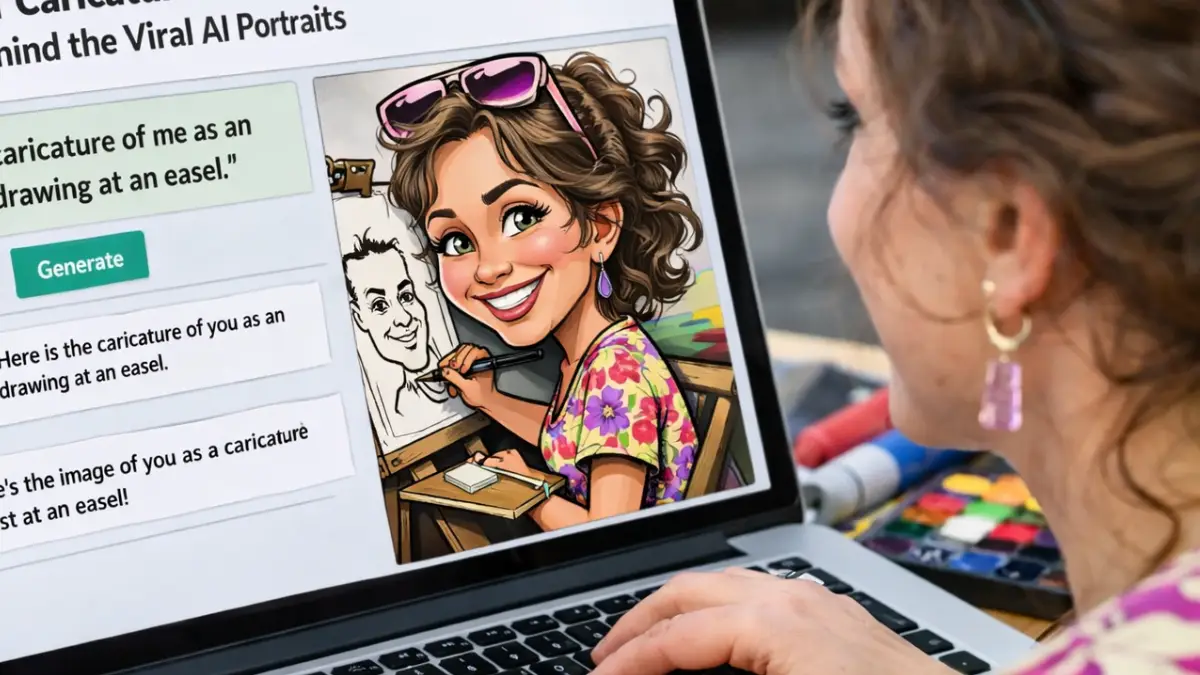
Scrolling through feeds these days, a colorful trend keeps popping up—caricature portraits made by artificial intelligence.
With creative representations that capture not just physical features but also professions and personalities, this viral phenomenon has captured the attention of both content creators and everyday users.
The fusion of generative AI tools such as ChatGPT with personal imagery is transforming how individuals present themselves online, sparking curiosity about what fuels this digital craze and how anyone can join in.
How did the ChatGPT caricature trend take off?
This trend did not emerge out of nowhere—it reflects a growing fascination with blending AI’s capabilities and self-expression. In late 2025 and early 2026, an increasing number of users began experimenting with ChatGPT prompts specifically designed to generate caricatures.
The idea of seeing oneself reimagined as a cartoonish figure—including details from careers or hobbies—quickly turned ordinary bios into eye-catching visuals that stand out in crowded timelines.
Unlike past avatar trends shaped by generic filters, this movement encourages uniquely tailored creations. Users interact directly with ChatGPT, composing custom-written prompts referencing their work attire, specialties, or notable traits.
The result is caricatures that strike a playful balance between realism and exaggeration. As more examples appeared across platforms, the challenge to craft increasingly personalized and humorous images propelled the trend forward at remarkable speed.
Steps to create a personalized ChatGPT caricature portrait
Diving into this trend does not require advanced technical skills, only a willingness to experiment and describe oneself thoughtfully.
Here is how many are creating their own AI caricatures:
- Gather background details about interests or profession that could make the caricature distinctive.
- Open a chat interface powered by ChatGPT, ready to process creative commands.
- Type a prompt describing desired features. For example: “Please create a caricature version of me as a firefighter who loves dogs.”
- If possible, provide visual references such as a clear selfie or job-specific wardrobe description to improve accuracy.
- Review the result and adjust the prompt if necessary until the caricature achieves the right mix of playfulness and authenticity.
Some individuals even compare various outputs, tweaking each component or adding elaborate backstories to inspire more vivid likenesses. Much of the enjoyment comes from interacting directly with the AI and watching it interpret identity inputs in unexpected ways.
“Create a caricature of me based on everything you know about me.”
Fine-tuning caricatures for different contexts
Certain users focus on crafting business-themed variants suitable for LinkedIn or company blogs, emphasizing professionalism mixed with enough humor to remain relatable.
Others prefer exaggerated cartoons for personal pages, opting for bolder colors and whimsical accessories to reflect hobbies or passions outside of work. By adapting prompts and approaches, it becomes possible to generate multiple caricature versions for various settings.
Comparing these methods highlights the adaptability of this trend. Those aiming for career advancement favor cleaner lines and recognizable occupational symbols, while more casual illustrators embrace creative license, encouraging the AI to stretch artistic interpretations further.
Regardless of intent, each finished artwork adds another example to the growing collection, fueling ongoing enthusiasm throughout virtual communities.
Managing privacy and data sharing when joining in
While the overall experience remains entertaining, it sparks discussions about how much information should be shared with AI platforms during image creation. Providing only necessary details ensures amusing output without revealing sensitive data.
Some participants avoid uploading real photographs entirely, relying instead on written prompts for greater privacy assurance.
The decision regarding how much context to provide rests with individual comfort levels. Groups organizing themed challenges often supply template prompts that minimize personal exposure while still delivering engaging results.
Why did this trend impact the ChatGPT platform?
I asked chat gpt to draw a caricature of me based on what it knew about me. What it came up with was amazing. pic.twitter.com/CN35xY46ix
— 💯ℂ𝕣𝕒𝕫𝕪𝔸𝔽👑🍄𝔹𝕦𝕥ℂ𝕦𝕥𝕖💯 (@Crazy_ButCute2) February 2, 2026
At its peak, the surge in requests placed unforeseen pressure on ChatGPT’s infrastructure. Reports noted brief service interruptions as thousands attempted to generate caricature images during peak hours. Site administrators responded swiftly to stabilize operations, demonstrating both the scale of the fad and the responsiveness of the technology teams behind it.
This episode illustrated the immense power of internet phenomena to overwhelm digital tools overnight. The AI’s flexible language understanding allowed users from diverse backgrounds to participate, multiplying demand far beyond previous activity spikes seen with other interactive graphic trends.
Caricatures as a new expression of digital identity
Interest in AI-created caricature portraits shows no signs of fading, reflecting society’s appetite for inventive ways to present identity online. These stylized images offer more than novelty—they ignite conversations about creativity, authenticity, and the evolving relationship between humans and intelligent software. Whether seeking laughter among friends or innovative ways to spotlight achievements, this trend enlivens digital spaces and makes them more personal, promising to inspire further creative uses of generative AI in the months ahead.
