

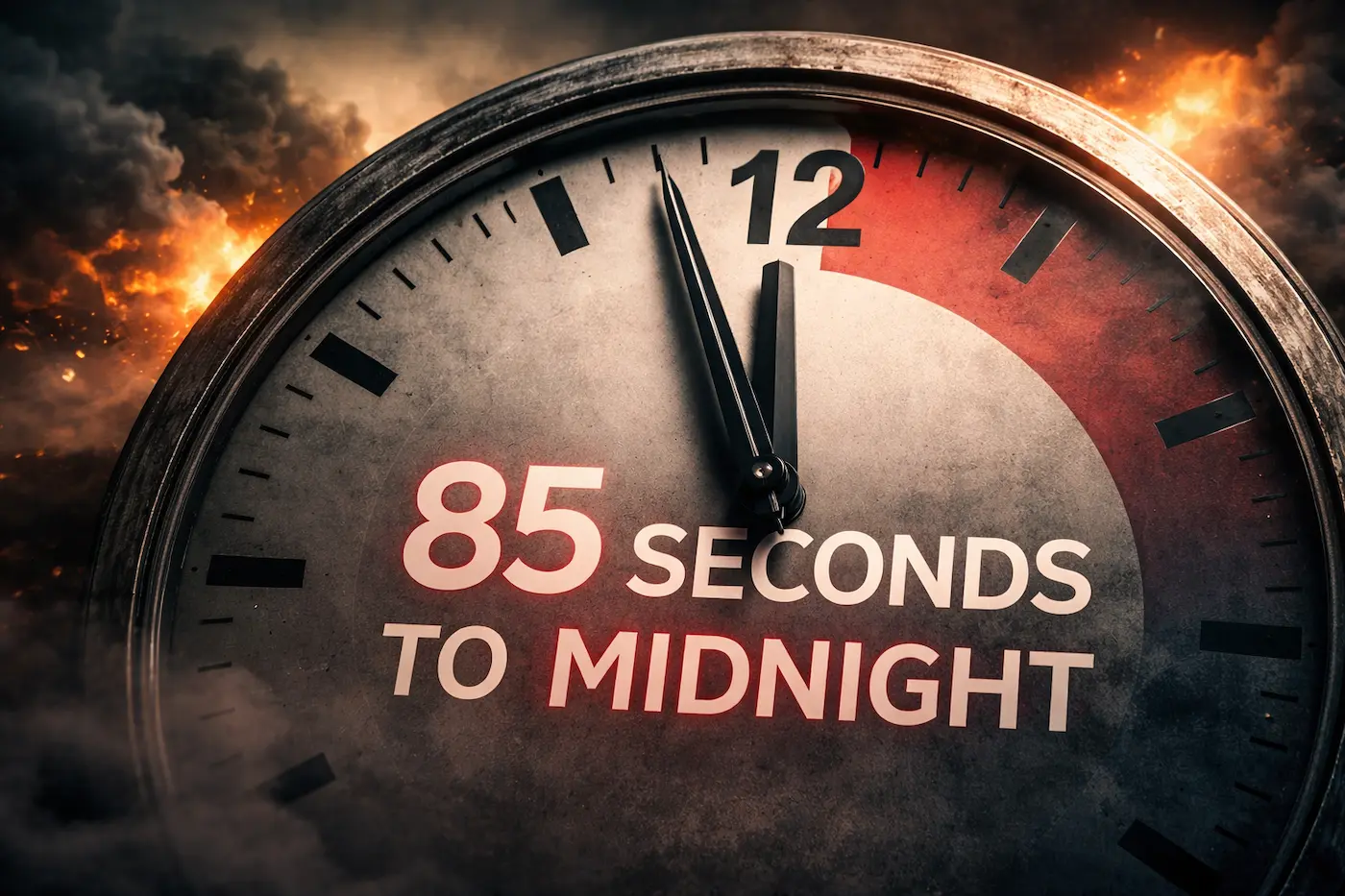
Each year, scientists update the symbolic Doomsday Clock, a striking visual metaphor that reflects how close humanity is to self-inflicted catastrophe. In 2026, experts set this timepiece to just 85 seconds before midnight, marking its most urgent warning in history. What are the implications for society and the planet? Here is a closer look at the message behind these ticking seconds, the forces driving us toward crisis, and what actions might still make a difference.
What is the Doomsday Clock?
The Doomsday Clock has its origins in the aftermath of World War II. Since 1947, it has served as a barometer for existential threats brought on by human activity. Originally, the clock’s warnings centered on the specter of nuclear war. Today, however, its scope includes environmental destruction, fast-evolving technologies, and growing geopolitical instability. Each January, leading researchers assess global risks and adjust the hands accordingly, offering a vivid snapshot of collective peril.
This symbolic clock does not predict specific disasters or events with precision. Instead, it represents the scientific community’s judgment about how near civilization stands to irreversible harm. Over decades, it has fueled debate, protest, and renewed calls for international cooperation. The latest setting highlights uniquely modern anxieties—from unprecedented heatwaves to artificial intelligence developing faster than ethical safeguards can keep up.
Why are we 85 seconds from midnight?
Moving the Doomsday Clock so close to midnight was no arbitrary decision. Researchers identified three major hazards that together create an extraordinary threat to global well-being. Each factor alone demands attention, but their combined impact leaves humanity especially vulnerable.
Climate disruption intensifies global risks
Unpredictable weather patterns, historic droughts, and extreme storms have become part of daily headlines. Melting glaciers and relentless wildfires underscore that climate change is neither remote nor theoretical. Despite international pledges to reduce carbon emissions, progress remains sluggish. Scientists point out that ice sheets keep sliding into the sea while fossil fuel use rebounds after temporary declines. These realities made environmental threats impossible to ignore in the recent adjustment of the clock.
Beyond rising temperatures, climate instability disrupts agriculture, heightens migration pressures, and sparks conflict over scarce resources. As nations struggle to adapt, inadequate global action amplifies the urgency reflected in those missing seconds.
Nuclear dangers persist in a changing world
Although the Cold War ended decades ago, nuclear weapons continue to represent a grave danger. Disarmament treaties that once pushed the clock back now falter or collapse entirely. Recent military escalations and strikes—especially involving volatile regions—increase the risk of open conflict. Growing stockpiles and eroding diplomatic trust have forced nuclear threats back into public consciousness.
A renewed arms race among major powers has also led to new investment in advanced weaponry and technology. Experts emphasize that any miscalculation involving these arsenals could trigger consequences far beyond national borders, keeping nuclear risk front and center in the Doomsday Clock’s assessment.
Artificial intelligence: promise and peril
The rapid rise of artificial intelligence brings both optimism and alarm. While AI promises breakthroughs in health care and sustainable development, there is increasing concern about misuse. Generative models could aid in the creation of biological weapons or fuel misinformation campaigns. With few robust regulations in place, powerful AI tools are being deployed with minimal oversight.
Some analysts warn about unpredictable outcomes if machine learning falls into the wrong hands or if flawed systems malfunction. As autonomous platforms interact with critical infrastructure and influence key decisions, the risks linked to AI stand alongside climate and nuclear concerns as top priorities for scientists monitoring global security.
Calls for global response: why every second counts
The Doomsday Clock serves less as a prophecy of doom and more as a call to action. By highlighting how little time remains before “midnight,” scientists urge leaders and societies to act decisively. Their recommendations are clear: accelerate the phase-out of fossil fuels, revitalize arms control efforts, and establish strong guidelines for emerging technologies. None of these solutions rely solely on technical fixes—they demand political leadership and active civic engagement.
Recent years have demonstrated that fragmented responses leave everyone exposed. International dialogue, innovation incentives, and local adaptation strategies all play essential roles in reversing the march toward midnight. Yet, inertia and short-term interests often stall meaningful progress. The clock’s warning reminds policymakers and citizens alike that hesitation only increases the costs.
Main factors driving the clock forward
The following table summarizes the primary drivers influencing the current position of the Doomsday Clock:
- International governance gaps worsen the dangers associated with each category.
- Growing mistrust between states hinders cooperation during shared crises.
- The need for swift technological regulation intensifies as digital tools rapidly evolve.
Rethinking responsibility in a world at risk
No single nation or group can turn back the clock alone. As the warning grows louder, responsibility rests with governments and communities alike. Regulatory frameworks, educational initiatives on climate resilience, and transparent communication between science and the public must come together quickly if midnight is to be averted. Every tick signals a crucial chance to reconsider priorities before regret replaces caution.
As a sober measure of man-made danger, the Doomsday Clock prompts society to reflect and act with urgency. Given the intertwined nature of today’s challenges, the remaining time feels both invaluable and uncomfortably brief.
